Spotlight on BMB Banner Carriers
Sarah DiDominico (BMB ’19)
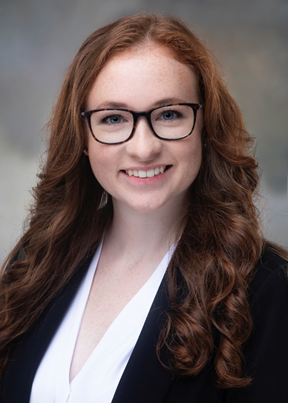
After graduation in 2019, BMB Banner carrier Sarah DiDominico went on to pursue a Ph.D. in Biomedical Science at Drexel University in a lab studying DNA repair. (After learning about DNA repair in Dr. James’s Molecular Genetics Course, she knew this was what she wanted to focus on in graduate school!) She was drawn to her lab because there were opportunities for basic science and translational research. While she loves the investigating the mechanisms of DNA repair, she was equally interested in targeting these pathways for cancer therapy, as her long-term goal has been to pursue a career in drug discovery in the pharmaceutical industry. Shortly after joining, the lab moved to the University of Texas Health San Antonio, where the biochemistry department has a strong DNA repair focus. This provided a great opportunity for collaboration. Since there, she has been characterizing small molecule inhibitors to target DNA-repair deficient cancers, and collaborating with a biophysical NMR lab to investigate protein-protein interactions of DNA repair factors. She is planning to defend and graduate this spring, and is currently applying for postdoctoral positions where she can gain a new set of technical skills and build her network to help transition into the pharmaceutical industry.
She says: “Some of my favorite memories from Gettysburg were all the “little” moments with people who became life-long friends and family- laughing and swapping stories during dinner at servo, going for runs on the battlefield, and movie nights in our dorms. My favorite stand out memory was that both my boyfriend (now husband) and I were banner carriers during graduation, and it just so happened that we walked next to each other during the procession!”
Jenny Giannini (BMB ’18)
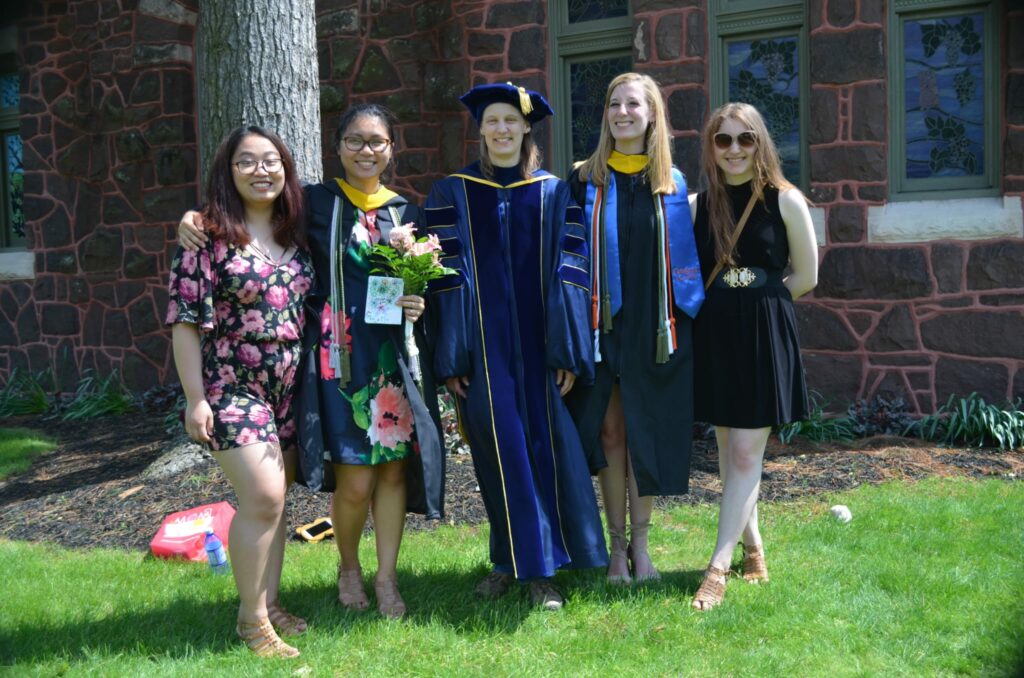
After graduating from Gettysburg as the 2018 BMB Banner Carrier, Jenny Giannini hopped across the pond to do a Fulbright Research Fellowship in Germany. She continued her research at the Max Delbrück Center for Molecular Medicine in Berlin for several years and currently works as a Scientific Application Specialist at Labforward, a Berlin-based start-up focused on laboratory digitalization. She works primarily with Laboperator, a digital platform that connects laboratory devices to a central platform and aims to increase efficiency in R&D laboratories. Jenny recently moved from Berlin to Basel, Switzerland to work more closely with the pharmaceutical companies using Laboperator. She enjoys working with scientists to accelerate their discoveries and learning about different scientific processes while getting to experience a variety of laboratory environments.
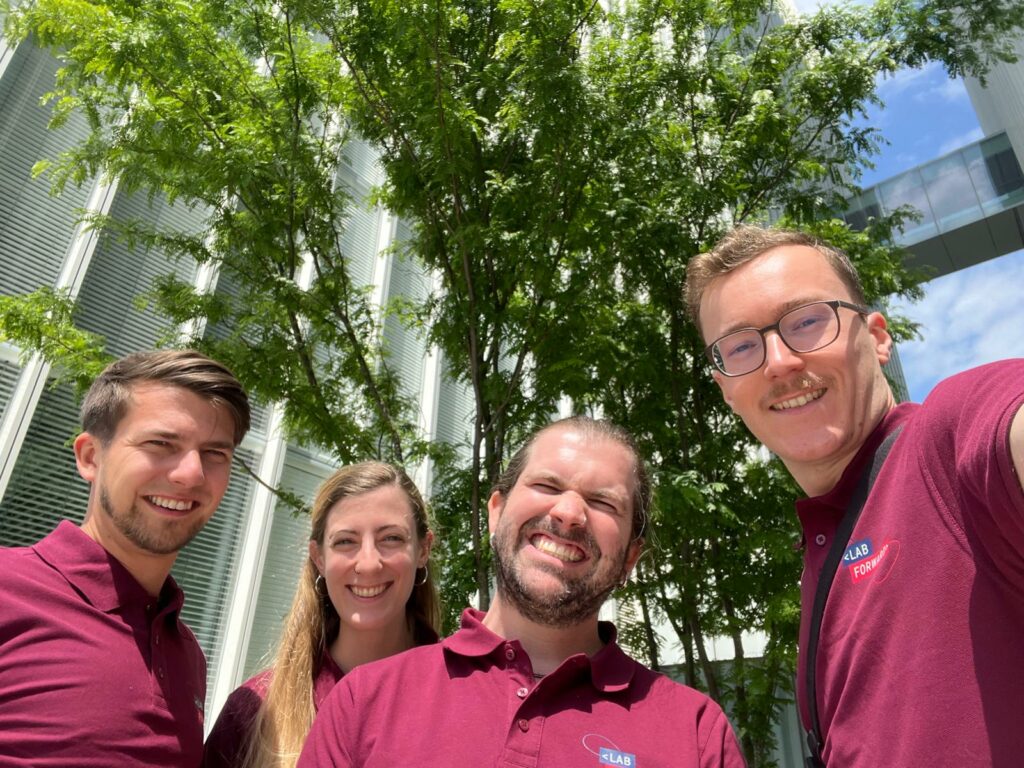
Outside of work, Jenny has enjoyed exploring Switzerland, hiking and discovering new trails with her dog. She spends her free time climbing, practicing yoga, painting, and playing board games with friends.
Looking back at Gettysburg, one of her favorite memories was taking X-Lab: Drugs and Cells, a cross-disciplinary hands-on introduction to the drug discovery process. In the course, Jenny and other students synthesized resveratrol derivatives and tested them on C. elegans with mutations that mimicked neurodegenerative diseases like Parkinson’s and Alzheimer’s. Jenny says, “It helped shape my understanding and develop my approach to problem solving, all of which continue to be relevant in my career.”
Stacey Heaver (BMB ’15)
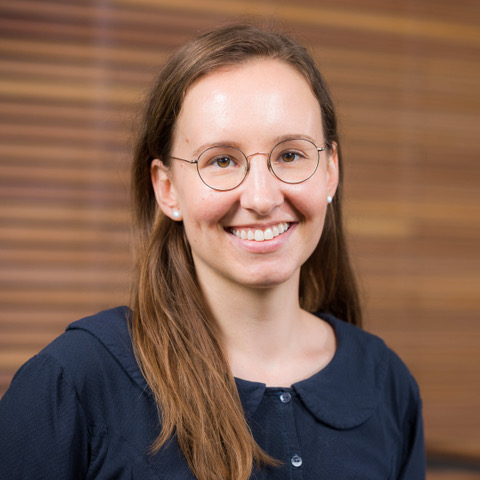
Stacey Heaver graduated from Gettysburg in 2015 and entered the Microbiology Ph.D. program at Cornell to study the human gut microbiome. Two years into her Ph.D., Stacey’s advisor Dr. Ruth Ley moved to the Max Planck Institute for Biology in Germany to start the Department of Microbiome Science. While she was up for what she thought would be a temporary adventure abroad, turns out it was a good fit and is still in Germany almost 8 years later! Stacey finished her Ph.D. in 2020, did a postdoc in the same lab, and just now recently became a project leader. Her research is focused on lipid metabolism in human gut bacteria, and the ways in which lipids mediate host-microbe interactions.
At Gettysburg, she was lucky to have the chance to do two summers of X-SIG research with Dr. Véronique Delesalle and Dr. Greg Krukonis, focused on bacteriophage bioinformatics and kombucha metabolites. Stacey’s earliest favorite scientific memory from Gettysburg was seeing the phage she isolated from soil outside of the Science Center on the electron microscope as part of the SEA-PHAGES coursework. Later on, she remembers growing big batches of kombucha in the lab for my senior thesis.
Stacey is grateful that at Gettysburg, we have hands-on research experience from the very first semester. Gettysburg gave her a great foundation to build a career in science, with close mentorship, support to pursue interest-driven research, a team-based lab atmosphere, and guidance in critical scientific thinking.
Tina Kelliher (BMB ’11)
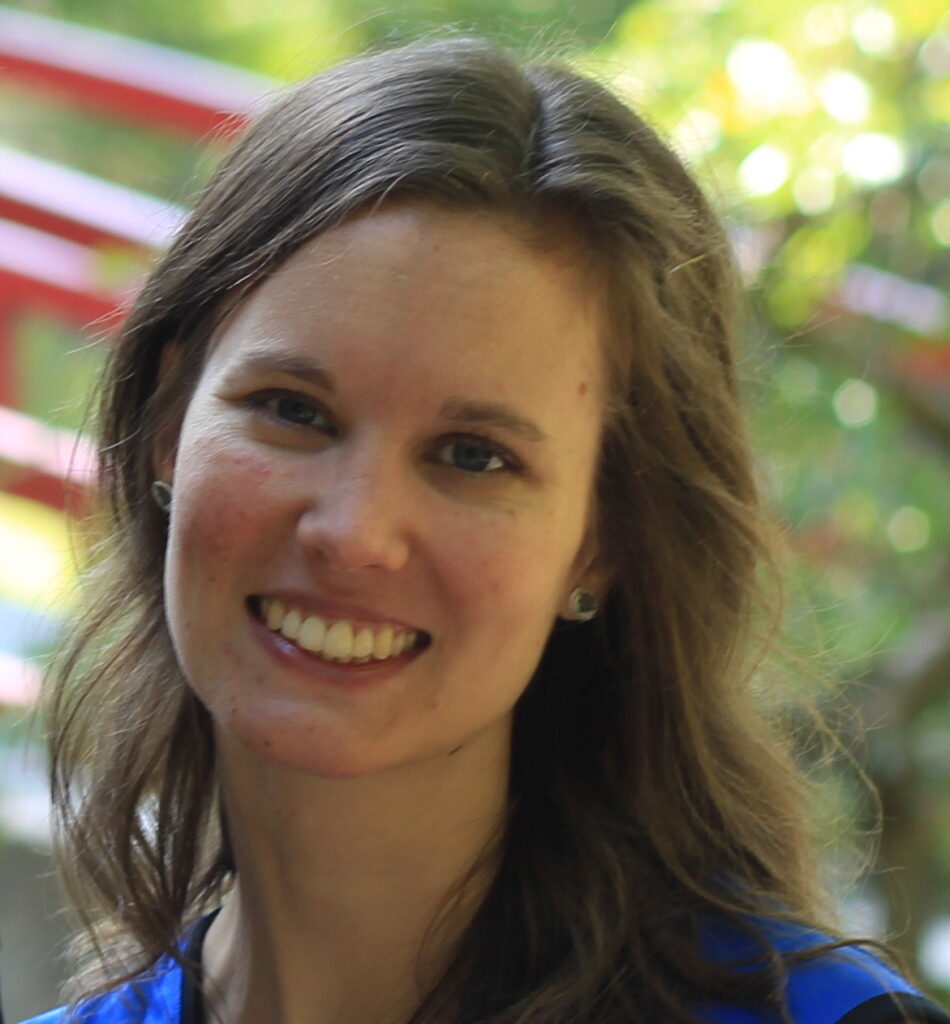
Tina Kelliher’s time at Gettysburg as a Biochemistry & Molecular Biology major and as a research assistant in the James laboratory was invaluable for her career path. After graduating in 2011, she joined the Genetics & Genomics program at Duke University and conducted PhD research on systems biology of gene regulatory networks. Tina entered graduate school convinced that she wanted to pivot to the cancer field (with a “higher eukaryote”), but instead found herself collecting more fungal species to work with in the lab, from Aspergillus research with Dr. James to PhD work with Saccharomyces and Cryptococcus. She finally acknowledged this passion for studying fungi, which are closely related to humans but much easier to genetically and biochemically manipulate in the laboratory. After conducting postdoctoral research at Dartmouth College and learning a fourth fungal model system with Neurospora, Tina joined the faculty at the University of Massachusetts Boston in 2023. At UMass Boston, she teaches bioinformatics and direct a research laboratory studying circadian rhythms where they aim to use Neurospora to understand how the circadian clock interacts with nutrients in the environment and, in the future, inform mechanisms for how human circadian rhythm disruptions like shiftwork can increase risk for metabolic disease and cancer.
| 2024 | Sarah MacDonald |
| 2023 | Emily Howe |
| 2022 | Leigh Magness |
| 2021 | River Larson Pollock |
| 2020 | Katie Watson |
| 2019 | Sarah DiDominico |
| 2018 | Jennifer Giannini |
| 2017 | Cordell Boggs |
| 2016 | Alecia Achimovich |
| 2015 | Stacey Heaver |
| 2014 | Miles Paszek |
| 2013 | Cam Nguyen |
| 2012 | Karlina Kauffman |
| 2011 | Christina Kelliher |
| 2010 | Katharine Hickey |
| 2009 | Tyler Kreitz |
| 2008 | Monica Charpentier |
| 2007 | Jenna Stokes |
| 2006 | Megan Campbell |
| 2005 | Walter Kowtoniuk |
| 2004 | Robert Clontz |
| 2003 | Amanda Sheets |
| 2002 | Evan Merkhofer |
| 2001 | Casey Connelly |
| 2000 | James Gallagher |
| 1999 | Jared Kravitz |
| 1998 | Amy Dickerson |
| 1997 | Jennifer Becker |
